Actual Address:
Poltava, Ivana Banka St., 3
Poltava region, Lubny, Viktora Novikova St., 2
Phone:
+38 099 024 98 24
+38 095 509 20 41
E-mail:
History of the Department
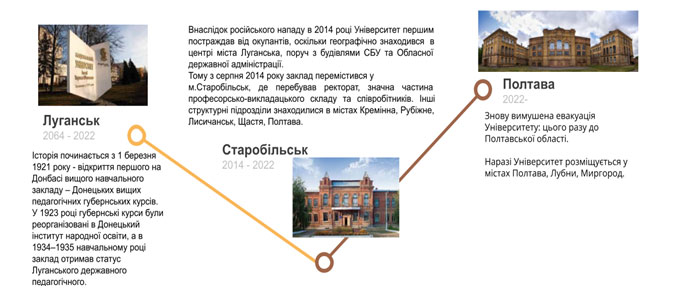
The Department of Philosophy and Sociology is a part of the Luhansk Taras Shevchenko National University, one of the oldest higher education institutions in Luhansk region. This university has long served as a stronghold of the Ukrainian identity in the Eastern Ukraine.
For over a century, it has endured numerous educational reforms, reorganizations, evacuations, and periods of repression, yet it continues to uphold its mission and traditions.
The Department of Philosophy and Sociology was originally established as the Department of Philosophy on December 30, 1964, in accordance with Order No. 238 of the Ministry of Education of the Ukrainian SSR.
With the introduction of the Sociology educational program in 1994, the department adopted its current name – Department of Philosophy and Sociology. At that time, the university became the first higher education institution in Donbas to train sociologists. The foundation for this new specialty was built upon the department’s strong philosophical and sociological tradition, which had been developed over more than 20 years.
The first Head of the Department was Dmytro Oleksandrovych Zhdanov (1929–1986).
In 1955, he defended his Candidate of Sciences dissertation: "On Truth and Correctness in Thinking."
In 1971, he defended his Doctor of Sciences dissertation: "Problems of the Genesis of Thinking."
In 1972, he was awarded the academic title of Professor.
[caption id="attachment_110435" align="aligncenter" width="254"]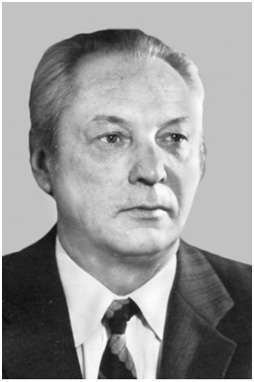 Dmytro Oleksandrovych Zhdanov[/caption]
Dmytro Oleksandrovych Zhdanov’s scientific interests focused on abstract thinking, logic, and the problems of scientific knowledge. He introduced the concept of "protoform of thinking" into academic discourse.
The idea that, at a certain stage in the development of thinking, there existed structures that gave rise to a system of interconnected forms of abstract thinking had been previously discussed by philosophers such as P. V. Kopnin and S. B. Krymskyi. However, it was D. O. Zhdanov who revealed the essence of transitional forms of reflective activity, which genetically linked visual-figurative thinking with abstract thinking. His ideas were later actively applied in both research and teaching by the Department members, including the renowned logician, Associate Professor O. S. Tiahnybedina.
Zhdanov’s tenure as Head of the Department (1961–1975) was crucial for its growth and development. He was a well-known figure in both academic and public spheres.
From 1975 to 1986, Dmytro Oleksandrovych served as Rector of what was then Voroshylovhrad State Pedagogical Institute named after T. H. Shevchenko.
He also held key leadership roles:
Chairman of the Voroshylovhrad Regional Organization and Board Member of the "Znannia" Society
Member of the Coordination Council for Scientific Research Programs at the Ministry of Education
Deputy Chairman of the Voroshylovhrad Regional Council of Rectors
Volodymyr Khomych Lobas (1941–2012)
A significant contribution to the development of sociological research traditions was made by Volodymyr Khomych Lobas.
He joined the Department of Philosophy in 1964, after graduating from the Faculty of Philosophy at Taras Shevchenko Kyiv State University.
He worked at the department for 23 years (1964–1987), rising from Assistant to Professor, before moving to Kyiv.
One of the first in the USSR to study philosophical analysis of language and semiotics.
Defended his Doctor of Sciences dissertation in 1982, becoming the youngest Doctor of Sciences in the USSR at the time.
In 1983, he was awarded the title of Professor.
[caption id="attachment_110439" align="aligncenter" width="256"]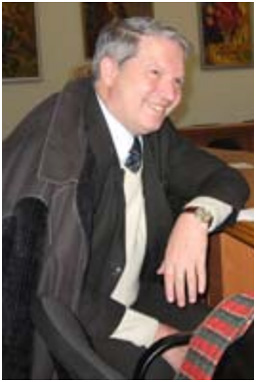 Volodymyr Khomych Lobas[/caption]
The core of Volodymyr Khomych Lobas’s research was the study of sign systems and the relationship between natural and artificial languages.
While exploring these topics, Professor Lobas discovered the paradox of communication, which explains various manifestations of the hermeneutic circle. He demonstrated that logical analysis alone is insufficient for studying sign systems. Since language is a dimension of sociality, even its logical problems ultimately require sociological explanations.
His book, "Semiotic Preconditions for Effective Management" (Kyiv, 1980), made a significant impact in Ukrainian and global science. It was the first work to clearly formulate the paradox of communication and propose methods to overcome it.
In 1987, Lobas moved to Kyiv, where he continued his academic career while maintaining strong ties with the department.
He supervised numerous Candidate of Sciences dissertations, including those of:
O. Levchenkova
A. Chanturia
Yu. Bohuslavska (Nuzhna)
And many others
In his final years, his research focused on:
Culture and rationalism
The rational and the irrational in public consciousness
Modern social sciences
Illya Fedorovych Kononov – New Leadership
The leadership of the department was passed to Illya Fedorovych Kononov, who became the Head of the Department in 1993.
Illya Fedorovych Kononov:
Born on November 1, 1955
Worked as an Assistant at the Department of Philosophy (1979–1982)
In 1986, he defended his Candidate of Sciences dissertation in philosophy under the supervision of Professor D. O. Zhdanov.
[caption id="attachment_110441" align="aligncenter" width="257"]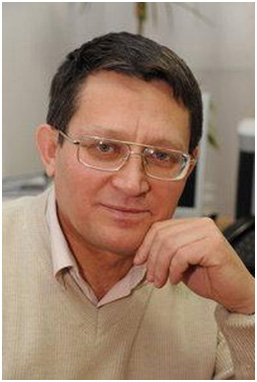 Illya Fedorovych Kononov[/caption]
While working in the field of philosophy, Illya Fedorovych Kononov always maintained an active civic position and developed a keen interest in sociological issues. Over time, his academic focus shifted entirely to sociology.
In 2006, he defended his Doctor of Sciences dissertation in sociology.
In 2007, he was awarded the academic title of Professor.
His research interests include:
Spatial analysis in sociology
Sociology of regions
Ukraine’s regional system
Relations between Donbas and Halychyna in Ukraine’s regional structure
Ethnosociology
Political sociology
Sociology of national security
Professor Kononov is the author of several sociological concepts, including:
The region as a cluster of subnational social practices
The contradictions between territorial and network-based organization of social relations in the modern world
As a renowned expert in regional sociology and spatial analysis, he is recognized not only in Ukraine but also internationally (in EU countries and Canada).
Currently, he is a visiting professor at Carleton University (Ottawa, Canada), where he applies sociological methods to study modern warfare, focusing on the Russian-Ukrainian conflict.
Scientific School: "Sociology of Regions and Spatial Analysis of Society"
Under Professor Kononov’s leadership, the Department of Philosophy and Sociology has established a research school called "Sociology of Regions and Spatial Analysis of Society."
This school brings together multiple generations of department graduates, for whom Professor Kononov serves as both a scientific leader and mentor.
The scientific contributions of several department members are well recognized within the Ukrainian sociological community:
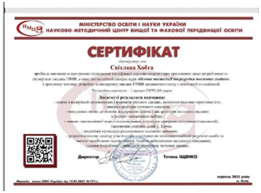
Associate Professor S. V. Khobta specializes in the sociology of borders
Associate Professor L. I. Verkhovod researches the sociological aspects of regional economies in wartime
Associate Professor A. A. Hots focuses on labor markets and new employment forms
Associate Professor K. M. Kotelenets is a leading researcher of the regional educational space, who does not only study educational environments theoretically but also actively engages in youth-oriented public initiatives
New Generation of Researchers
Recently, several young scholars have joined the research school:
O. S. Yurko (Petrenko) studies regional information environments
V. S. Pliasov focuses on harmonizing the interests of different social groups in the region (currently serving in the Ukrainian Armed Forces)
I. V. Zhurba researches regional separatism
General Information
The Department of Philosophy and Sociology aims to train highly professional specialists with advanced methodological research culture and analytical skills, capable of solving complex specialized tasks and practical problems. Additionally, the department plays a role in promoting and spreading sociological and philosophical knowledge within its region.
Department Objectives:
To develop general academic (philosophical) competencies in students of all specialties, including:
A systemic scientific worldview
Methodological culture
Critical and creative thinking
Knowledge of modern research methods
To prepare highly qualified sociologists capable of conducting theoretical and empirical research on contemporary Ukrainian society and regional communities, as well as identifying and analyzing potential threats to national interests in various spheres of public life (information, economic, political, military, and environmental threats).
Department Mission:
To influence society through:
Training specialists in sociology
Conducting theoretical and empirical research
Disseminating sociological and philosophical knowledge within the regional community
Educational Activities
The department serves as the graduating department for the specialty 054 "Sociology", within the field of knowledge 05 "Social and Behavioral Sciences", offering programs at the:
First (Bachelor’s) level
Second (Master’s) level
Third (Doctoral) level
Bachelor’s Degree Program – "Sociology"
List of Core Educational Components (Syllabi):
Ukraine in the Context of European History and Culture
Oral and Written Communication & Academic Rhetoric
Foreign Language for Professional Purposes
Philosophy
Physical Education
Logic and Methodology of Scientific Knowledge
Information Technology in Sociological Work
Higher Mathematics and Probability Theory
Introduction to Sociology
History of Sociology
Gender Studies and Gender Auditing
Sociology of Mass Communications
Theoretical Sociology
Professional Ethics for Sociologists
Methodology and Methods of Sociological Research
Qualitative Research Methods in Sociology
Theories of Social Structures
Sociology of Culture and Intercultural Communication
Sociology of Spatiality and Border Studies
Sociology of Politics and Law
Sociology of Economics
Mathematical Methods and Computer Analysis in Quantitative Sociological Research
Sociology of Organizations and Management
Modern Sociological Theories
Sociology of National Security and War
Sociology of Conflict and Mediation
Introductory Internship
Industrial Internship
Pre-Diploma Internship
Coursework in Sociology
Completion of a Qualification Project
Final Certification
Elective Educational Components
The program also offers a list of elective courses, allowing students to tailor their individual educational and professional trajectories.
The culmination of the learning process and an opportunity for students to experience research work is their qualification project.
Students begin preparing their qualification work at least one year before graduation.
Some students start as early as the third year, selecting their research topic for coursework.
Master’s Degree Program – "Sociology of Border Studies and National Security"
This program builds upon bachelor’s-level training, focusing on border sociology and national security issues. It prepares graduates for advanced research and professional roles in sociological analysis, public policy, and security-related fields.
Master’s Degree Program – "Sociology of Border Studies and National Security"
List of Core Educational Components (Syllabi):
Logic and Methodology of Scientific Knowledge
Grant Writing and Project Management
Corporate Ethics and Corporate Social Responsibility Management
Methodological Trends in Contemporary Global and Ukrainian Sociology
Sociology of Borders
Fundamentals of National Security and Sociological Analysis of Social Risks and Threats
Advanced Methods and Technologies of Sociological Research
Military Sociology
Eco-Sociology and Environmental Security
Sociology of International Relations and Geopolitics
Industrial Internship
Pre-Diploma Internship
Completion of Qualification Project
Final Certification
The program also includes a list of elective courses, allowing students to tailor their individual educational and professional trajectories.
The logical conclusion of the master’s studies is the defense of a qualification (master’s) thesis.
Department’s Role in General University Education
As a university-wide department, the Department of Philosophy and Sociology also provides instruction in:
"Philosophy" for all bachelor’s degree programs
"Logic and Methodology of Scientific Knowledge" at both bachelor’s and master’s levels
At the doctoral level:
"Modern Scientific Revolution and Methodology of Scientific Knowledge"
"Philosophy of Science"
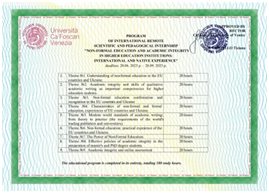
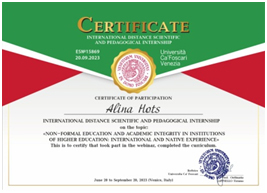
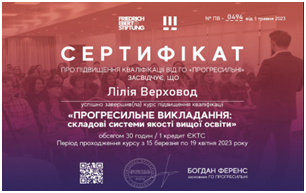
The Department members regularly undergo internships and professional development programs in both Ukraine and abroad.
Postgraduate Studies and Academic Continuity
The department offers a PhD program in specialized and applied sociology, ensuring continuity in sociological education. This allows students to progress from bachelor’s and master’s levels to earning a PhD in Sociology.
Principles of Educational Activity
The department’s educational philosophy is based on four key principles:
Systematic Approach
Ensuring that the goals, content, teaching methods, technologies, and assessment mechanisms align with the expected learning outcomes. The department follows:
The Ukrainian Higher Education Standard in the field 05 "Social and Behavioral Sciences", specialty 054 "Sociology"
The standard was approved by the Ministry of Education and Science of Ukraine (Order No. 371, March 4, 2020)
Innovation and Integration of Education and Science
Programs are regularly updated based on scientific advancements
Emphasis is placed on developing students’ ability to acquire and analyze new information
Key research-oriented courses include:
Logic and Methodology of Scientific Knowledge
Methodology and Methods of Sociological Research
Advanced Methods and Technologies of Sociological Research
Internships in sociological research
During internships, students collect, analyze, and interpret social data, using methods such as:
Content analysis
Standardized interviews
Focused group interviews
Student-Centered Learning
Flexible course structures allow students to adapt their learning paths to evolving needs and interests
Feedback mechanisms include:
Student surveys
Graduate and employer feedback
Annual independent assessments by the University’s Quality Assurance Department
Opportunities for students to comment on each course
Students can design individual learning trajectories through elective courses
Engagement with Society
The department collaborates with external experts, including:
Business representatives
Local government officials
State institutions
Non-governmental organizations (NGOs)
Partnerships and Collaborations
The department maintains strong academic, public, governmental, and business partnerships through cooperation agreements.
Academic Partners:
Donbas State Pedagogical University
Pavlo Tychyna Uman State Pedagogical University
Khmelnytskyi National University
Vasyl Stefanyk Precarpathian National University
Baltic International Academy (Latvia)
University of Bath (Somerset, United Kingdom)
University of Barcelona (Spain)
University of Burgundy (France)
Transilvania University of Brașov (Romania)
Public and Non-Governmental Organizations:
NGO "Center for Joint Development 'Active Community'"
NGO "Inventors"
Luhansk Regional Organization of the Trade Union of Education and Science Workers of Ukraine
Ukrainian Association of Educational Researchers
Oleksandr Yaremenko Ukrainian Institute for Social Research
Luhansk Initiative NGO
United Nations High Commissioner for Refugees (UNHCR) in Ukraine
NGO "Regional Development Agency of Eastern Donbas"
Government and Local Authorities:
Executive Committee of the Starobilsk City Council (Luhansk region)
Starobilsk District Military Administration (Luhansk region)
Department of Education and Science of the Luhansk Regional Military-Civil Administration
Poltava City Social Services Center
Department of International Technical Assistance, Innovation Development, and External Relations (Luhansk Regional State Administration)
Operational Command "North"
Military Unit A1788
Business Partners:
ForService UA Sales LLC
Fieldwork Agency LLC
The department's strong network of partners ensures that students gain practical experience, access to modern research opportunities, and career prospects in sociology, national security, and border studies.
The Staff of the Department of Philosophy and Sociology
The educational process is conducted by the professorial and teaching staff of the department:
Department Leadership
Svitlana Viktorivna Khobta – Candidate of Sociological Sciences, Associate Professor, Head of the Department of Philosophy and Sociology, Program Director for the Master's Degree Program "Sociology of Border Studies and National Security".
Illya Fedorovych Kononov – Doctor of Sociological Sciences, Professor.
Teaching Staff
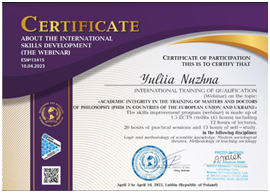
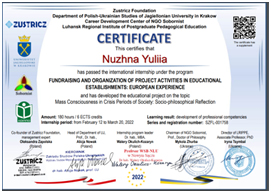
Yuliia Serhiivna Nuzhna – Candidate of Philosophical Sciences, Associate Professor, Deputy Director of the Educational and Scientific Institute of Social and Humanitarian Sciences.
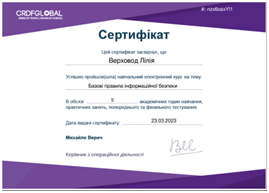
Liliia Ivanivna Verkhovod – Candidate of Sociological Sciences, Associate Professor.
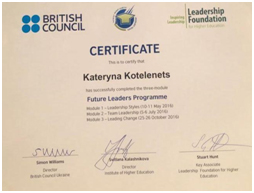
Kateryna Mykhailivna Kotelenets – Candidate of Sociological Sciences, Associate Professor, Program Director for the Bachelor’s Degree Program “Sociology".
Alina Anatoliivna Hots – Candidate of Sociological Sciences, Associate Professor.
Ihor Vyacheslavovych Zhurba – Assistant Lecturer, Deputy Director for Social and Humanitarian Affairs at the Educational and Scientific Institute of Social and Humanitarian Sciences.
Professional Development
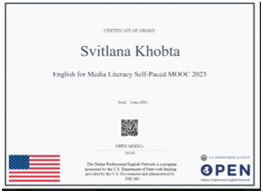
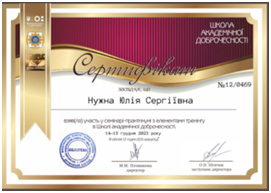
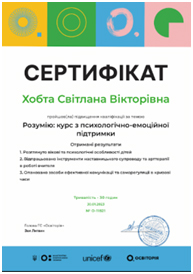
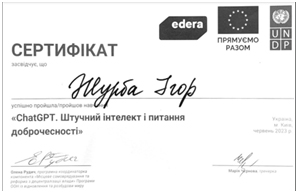
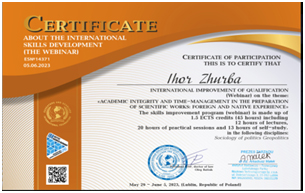
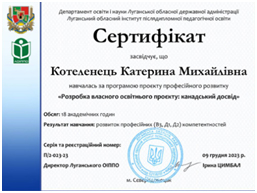
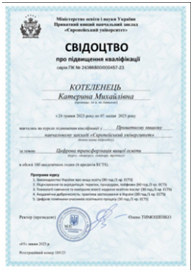
The department’s members regularly undergo internships and professional development both in Ukraine and abroad, ensuring that their knowledge remains up-to-date with global trends in sociology and philosophy.
Scientific Research Activities
The department conducts research within the scientific school"Sociology of Regions and Spatial Analysis of Society", focusing on four main areas:
Sociology of Space
Sociology of Regions
Sociology of Borders
Ukrainian Society in Wartime
The department's research efforts center on spatial analysis of modern Ukrainian society, peripheral capitalism, and mass consciousness during social crises and war. Key research topics include:
Globalization and regionalization in the modern world
Theoretical analysis of Ukraine’s regional space
Spatial aspects of contemporary capitalism
Economic behavior in an old industrial region
Comparison of Donbas and Halychyna as polar regions (social structure, employment, values)
Mass consciousness in conflict zones in Donbas
Borders as objects of sociological analysis
Theoretical Framework
The department has developed regional sociology as a distinct field of sociological analysis, proving that:
A region is a product of modern society, formed through adaptive interaction between society and nature
Regional analysis must consider physical space
Ukraine’s regional system should be examined within global trends of globalization and regionalization
A cross-regional study (2014) of everyday life in Donbas and Halychyna was conducted before the outbreak of war
The research applies spatial analysis, drawing from classical works of:
Georg Simmel
Pitirim Sorokin
Pierre Bourdieu
Methodologically, the research is grounded in:
World-systems analysis (Immanuel Wallerstein)
Modernization theories (André Gunder Frank, Zygmunt Bauman, Ulrich Beck)
With the outbreak of war in 2014 and the full-scale invasion in 2022, research has expanded to the sociology of modern warfare, focusing on:
Life in frontline areas
The specific nature of war in Ukraine
Major Research Projects
Recent large-scale research projects include:
1️ "The Role of Humanistic Ideas in Ukraine’s Economic, Political, and Cultural Integration"
Explores the role of humanistic heritage in solving contemporary challenges
Develops social technologies for integration
2️. "Mass Consciousness of Luhansk Region Residents in Crisis Periods"
Collects empirical data on public perceptions
Provides policy recommendations for government decision-making
3️. "The Role of Regional Media in Democratic Society Development"
Uses content analysis and surveys
Examines the media’s role in transitional periods
4️. "Mass Consciousness in the War Zone of Donbas" (2016–2018, State Registration No. 0113U001778, Ministry of Education and Science Grant)
Developed the concept of modern unconventional wars as a form of bourgeois Blanquism
Found that mass consciousness in crisis and wartime is shaped by online and offline network structures, leading to:
Autonomization of mass consciousness from politics and traditional media
New economic activities linked to spatial disintegration
Pendulum migration between free and occupied territories
Identified memeplexes in free and occupied Donbas, showing their role in information warfare
Proposed trusted-group research methods for data collection in crisis and war
Developed information panels and crisis governance tactics for frontline areas
Final Publication:
The research culminated in the collective monograph:
"Mass Consciousness in the War Zone of Donbas" (edited by I. F. Kononov, Starobilsk, 2018, 275 pages).
War, Migration, and Geopolitical Research
Professor Illya Kononov’s Analysis of War and Migration
Studied the geopolitical context of military migration crises
Examined Ukrainian war refugees in NATO countries, proving that:
The Russia-Ukraine war, though fought on Ukrainian territory, has global significance
Mass migration of Ukrainians is a major aspect of the war
War migration flows indicate a global crisis in world order since the 1990s
Ukrainian refugee flows are unique due to:
Extraordinary scale
High mobility
Gender-age imbalance
Majority of refugees being urban, highly educated individuals
In the long term, Ukraine faces a demographic catastrophe and post-war reconstruction challenges
Conclusion:
Ukraine’s migration crisis must be resolved within the framework of a post-war global reorganization.
Key Publications and Research Contributions
Most comprehensive research publication:
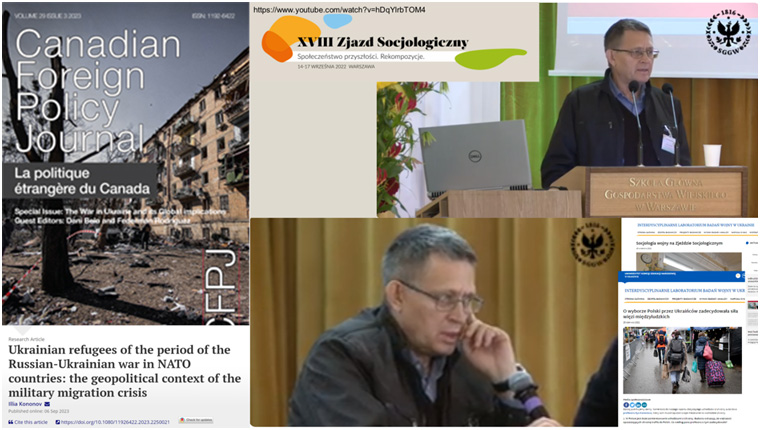
Illia Kononov (2023):"Ukrainian Refugees of the Period of the Russian-Ukrainian War in NATO Countries: The Geopolitical Context of the Military Migration Crisis,"Canadian Foreign Policy Journal, DOI: 10.1080/11926422.2023.2250021.
Ongoing Research Areas
Ihor Vyacheslavovych Zhurba
Examines war in the context of different political systems
Focuses on the relationship between war necessity and political regimes
Argues that external factors alone cannot explain Russia’s war against Ukraine
Identifies internal factors driving Russian aggression:
Authoritarian political system that requires an external enemy
Distorted personal beliefs of the Russian president and his inner circle
Liliia Ivanivna Verkhovod
Studies economic processes in border regions
Highlights how peace promotes cross-border cooperation, while war:
Disrupts economic ties and social practices
Creates insecurity, instability, and tension
Forces new economic survival strategies in war-affected areas
Identifies key wartime borderland characteristics:
Border closures vs. increased cooperation with friendly nations
Strengthening of national identity
Emergence of war-adaptive economic activities
Shift in regional economic elites and business structures
Kateryna Mykhailivna Kotelenets & Svitlana Viktorivna Khobta
Analyze sociological research methods during wartime, focusing on:
Field research organization
Engaging specific target audiences
Expert and Consulting Activities
Government, NGO, and Business Collaboration
Policy and Regional Development Projects
Kateryna Kotelenets & Svitlana Khobta – Expert consultants on:
Project:"Conceptual and Legal Foundations for Donbas Institutional Recovery"
Partners:
Ukrainian Association for Community Self-Organization Support
Center for Political and Legal Reforms
International Renaissance Foundation (2023–2024)
Svitlana Khobta – Research consultant for Fieldwork Agency LLC on:
Research methodology development (sampling, target groups, data collection)
Reviewing research instruments and analytical reports (2023–2024)
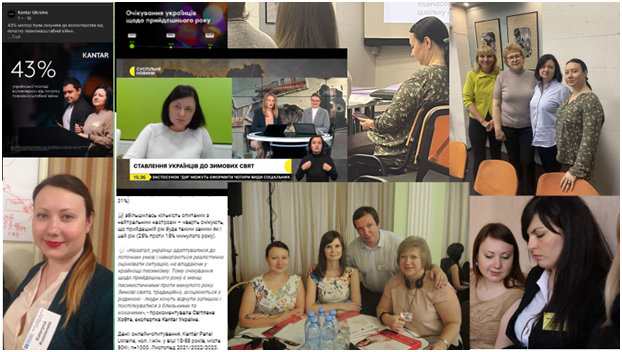
Svitlana Khobta – Senior Project Manager at Kantar Ukraine, leading a team of analysts (since 2022)
Illya Kononov, Kateryna Kotelenets & Ihor Zhurba – Working group members for:
Implementation of the Donetsk & Luhansk Economic Development Strategy
Phase 2 Analysis of the "Economic Transformation of Donbas" Project (March 5, 2021)
Collaborated with:
Ministry of Reintegration of Temporarily Occupied Territories of Ukraine
Department of Economic Development, Luhansk Regional Administration
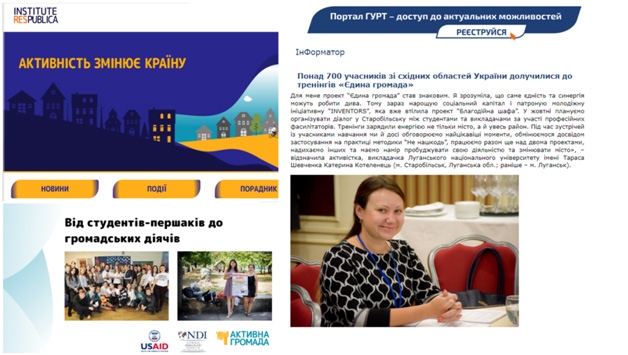
Yuliia Nuzhna & Kateryna Kotelenets – Members of the Gender Equality Advisory Council under the Starobilsk City Council (since 2021)
Gender and Youth Research Projects
Kateryna Kotelenets – Author of:
Gender Passport of Luhansk Region (2017, 2019, 2020)
Gender Passport of Melitopol (2020)
"Starobilsk Youth: Socio-Cultural Portrait" (2018)
"Starobilsk Tourism Study" (2021)
Kateryna Kotelenets – Lead researcher and consultant for:
"Sociocultural Portrait of Youth in Luhansk Region" (2020)
Funded by the Luhansk Youth Center & Youth and Sports Department
Used to develop the 2021–2025 Regional Youth Program
Regional Development & Policy Strategy Consulting
Kateryna Kotelenets – Strategic consultant for:
Starobilsk Economic Development Strategy 2025
Strategic Planning for Bilokurakyne Territorial Community (2015–2017)
"Social Dialogue for Community Development in Ukraine’s Decentralization Reform" (2019–2022)
"Analysis of Government Support for Regional Development Projects"
Consultant for sociological research and strategic planning for:
Luhansk Civic Initiative NGO (2015–2023)
"Active Community" Development Center (2018–2023)
Starobilsk City Council (2019–2023)
Luhansk Regional Youth Council – Youth Needs Analysis (2021)
Conclusion
The Department of Philosophy and Sociology at Luhansk Taras Shevchenko National University is a leading research hub in sociology, political analysis, and border studies, with strong international collaborations. The departmentmemebers actively contribute to policy-making, economic development strategies, wartime sociological research, and gender studies, ensuring that academic knowledge is translated into real-world solutions.
Student Research Activities
The Department of Philosophy and Sociology actively engages students in scientific research according to the department’s Student Research Plan (NDRS).
Student Research in Practice:
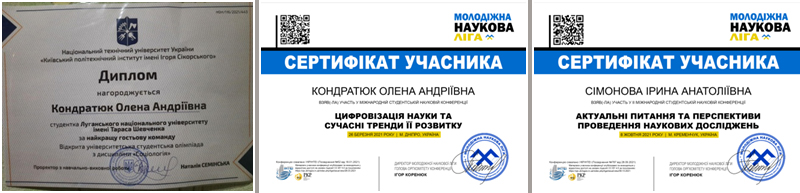
Students enrolled in the "Sociology" and "Sociology of Border Studies and National Security" programs conduct sociological research during their internships.
Research findings are presented at Science Days, where students showcase their analytical work.
Sociological Laboratory:
The department operates a Sociological Laboratory, providing students with hands-on experience in data collection, analysis, and reporting.
The lab supports student projects in quantitative and qualitative research, helping them develop practical research skills.
Through these activities, students gain valuable research experience, preparing them for academic careers, policy analysis, and applied sociology roles.
Student Involvement in Research Projects
Students at all levels of the "Sociology" program actively participate in department-led projects, contributing to real-world sociological research.
Opportunities for Student Engagement:
Participation in research projects implemented by the department
Presenting research at conferences, academic competitions, and stakeholder-sponsored research challenge
Competing in sociology olympiads
Publishing research findings in academic journals
Scientific Publications:
The results of student research are often published as scientific articles, allowing students to gain recognition for their work and develop their academic and professional portfolios.
These opportunities help students apply theoretical knowledge to practical research, preparing them for careers in academia, policy analysis, and applied sociology.
International Collaborations and Participation in Global Conferences
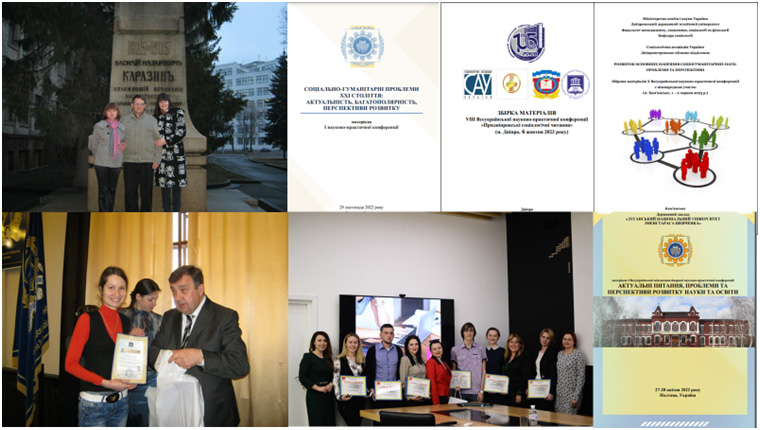
The Department of Philosophy and Sociology places great emphasis on international cooperation and actively engages in global academic discourse.
Key International Engagements:
Professor Illya Kononov:
Editorial board member of the international journal Nowa Ukraina (Kraków, Poland)
Visiting professor at Carleton University (Ottawa, Canada)
Regularly publishes research in European and Canadian academic journals
The department's international presence allows for academic exchange, global networking, and cross-border research collaborations, strengthening its role in contemporary sociological studies.
Such participation enhances the department’s academic influence, fosters global partnerships, and keeps the staff up-to-date with cutting-edge sociological research.
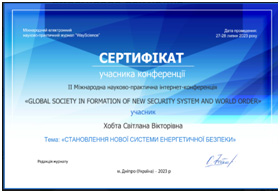
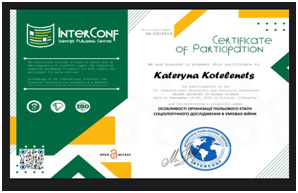
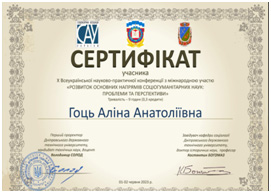
Membership in Professional Associations
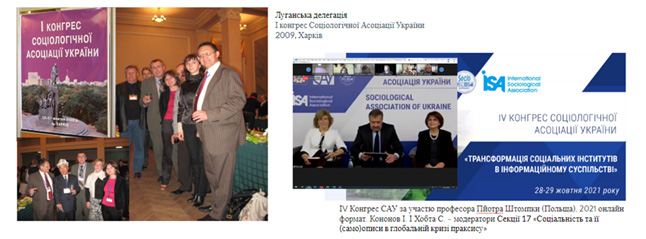
All members of the Department of Philosophy and Sociology are members of the Sociological Association of Ukraine (SAU) 🔗 sau.in.ua.
Key Leadership Roles:
Illya Fedorovych Kononov – Head of the Luhansk Regional Branch of SAU
Illya Fedorovych Kononov & Svitlana Viktorivna Khobta – Board Members of the Sociological Association of Ukraine
The participation of the members of the Department in professional associations ensures active involvement in national sociological research, enhances networking opportunities, and promotes academic collaboration at the highest level.
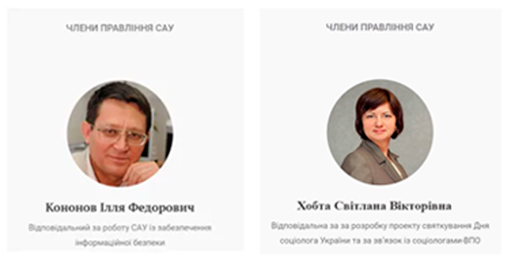
This involvement ensures that the department remains at the forefront of sociological research and professional development in Ukraine.
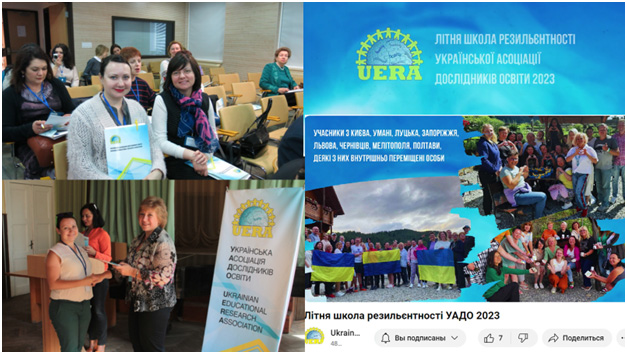
Svitlana Viktorivna Khobta and Kateryna Mykhailivna Kotelenets are members of the Ukrainian Educational Research Association (UERA) 🔗 UERA website.
Non-Formal Education and Youth Engagement in Luhansk Region
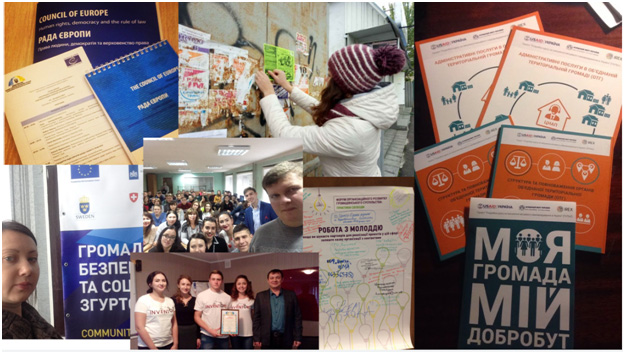
The members of the Department of Philosophy and Sociology are pioneers of non-formal education within the Educational and Scientific Institute of Social and Humanitarian Sciences.
Regular Non-Formal Education Activities:
Training sessions
Seminars and workshops
Conferences and public events
Awareness campaigns and social initiatives
Networking events and youth gatherings
Key Focus Areas:
Promotion of patriotic and democratic values
Advancing Sustainable Development Goals (SDGs)
Encouraging youth participation in civic initiatives
"Inventors" Youth NGO
In 2015, thanks to the organizational talent of Kateryna Mykhailivna Kotelenets, the "Inventors" Youth NGO was established.
Impact:
Inspired young people to create their own projects
Encouraged self-realization in various spheres of social life
Provided a platform for youth engagement in community development
The department’s commitment to non-formal education fosters active citizenship, leadership skills, and youth empowerment in the Luhansk region.
Youth Initiatives by "Inventors" NGO
For the past six years, the "Inventors" Initiative Group, led by Kateryna Mykhailivna Kotelenets, has successfully implemented numerous educational, cultural, and research projects.
Key Focus Areas:
Supporting internally displaced youth (IDPs) by assisting their adaptation and fulfilling their needs
Creating opportunities for youth initiatives and social activism
Promoting education, culture, and civic engagement
Through these projects, "Inventors" has played a crucial role in empowering young people, fostering community resilience, and encouraging youth-driven social change.
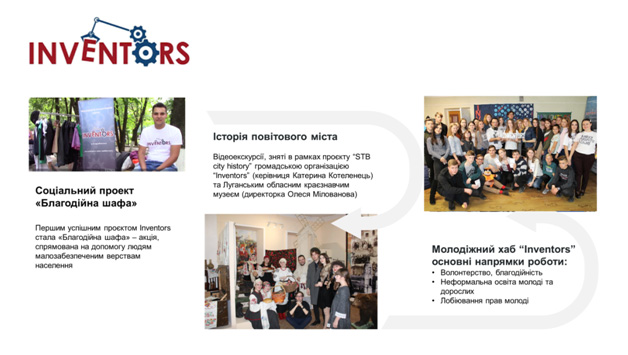
Youth Participation and Humanitarian Efforts by "Inventors" NGO
The youth involved in "Inventors" have played a significant role in regional development and crisis response.
Key Contributions:
Community Development:
Contributed to the development strategy of their local community
Conducted research on the needs of youth in Luhansk region
Actively represented youth interests in advisory and consultative bodies
Humanitarian Assistance During War:
Following Russia’s full-scale invasion of Ukraine, the "Inventors" team provided crucial support to youth affected by the war:
Helping young people impacted by shelling
Providing humanitarian aid
Offering social and psychological support
Through these efforts, "Inventors" has continued to empower young people, strengthening their resilience and engagement in Ukraine’s recovery and future development.
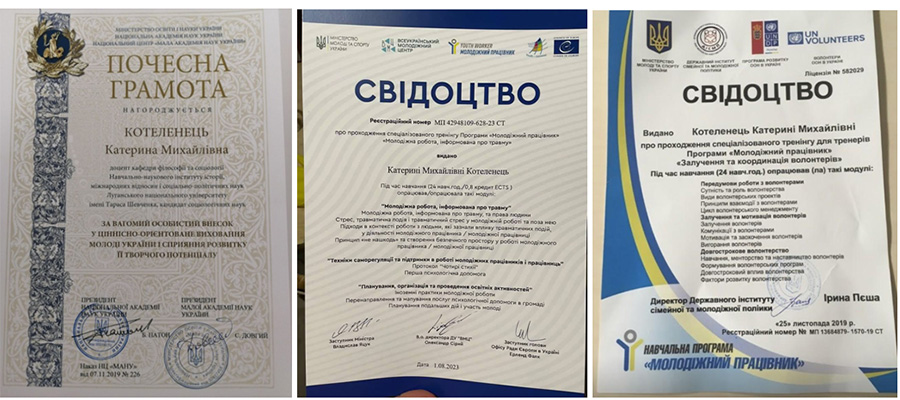
Recognition and Certifications in Youth Work
Kateryna Mykhailivna Kotelenets
Certified Youth Worker with official state-recognized certificates
Actively contributes to youth development, education, and civic engagement
Awards for Youth Engagement
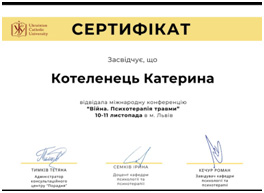
Members of the Department of Philosophy and Sociology – Kateryna Kotelenets, Ihor Zhurba, and Yuliia Nuzhna – have been awarded certificates of recognition by the Junior Academy of Sciences of Ukraine for their significant contributions to youth work.
These achievements highlight the department’s commitment to empowering young people, fostering intellectual growth, and supporting youth initiatives in Ukraine.
25.02.2025