

Report at the International Scientific and Practical Conference
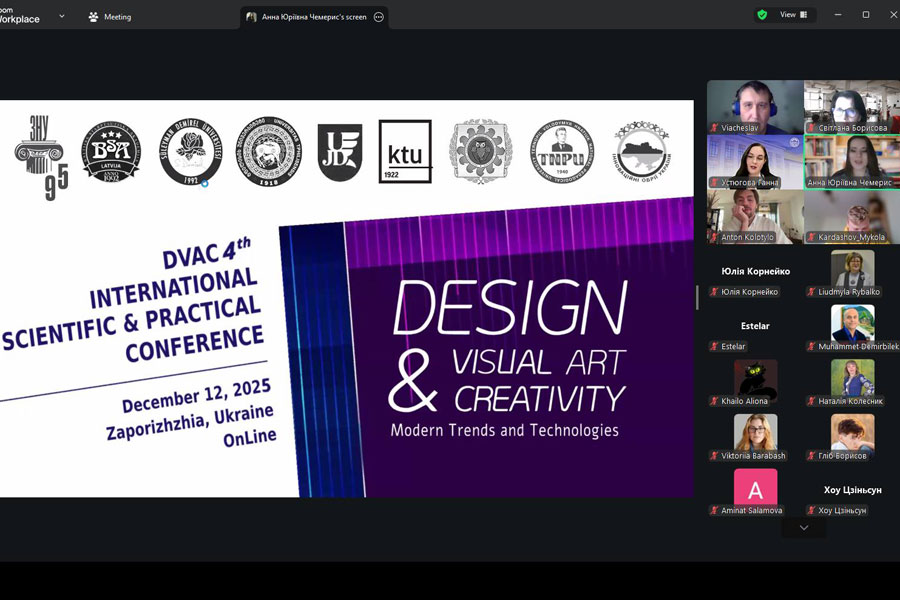
The plenary session of the conference was dynamic and eventful, reflecting the breadth of modern research approaches in the field of design, art and digital technologies.
The report of Demirbilek Muhammet (PhD, Prof. of Educational Sciences Department, Suleyman Demirel University, Turkey) aroused considerable interest among the conference participants. The participants began by discussing the impact of artificial intelligence - from the detection of deepfake images to the prospects of generative systems in graphic design. Further reports outlined the humanitarian dimension of the profession: storytelling in artistic practice, cultural aspects of development, as well as the role of animation and calligraphy in the 21st century.
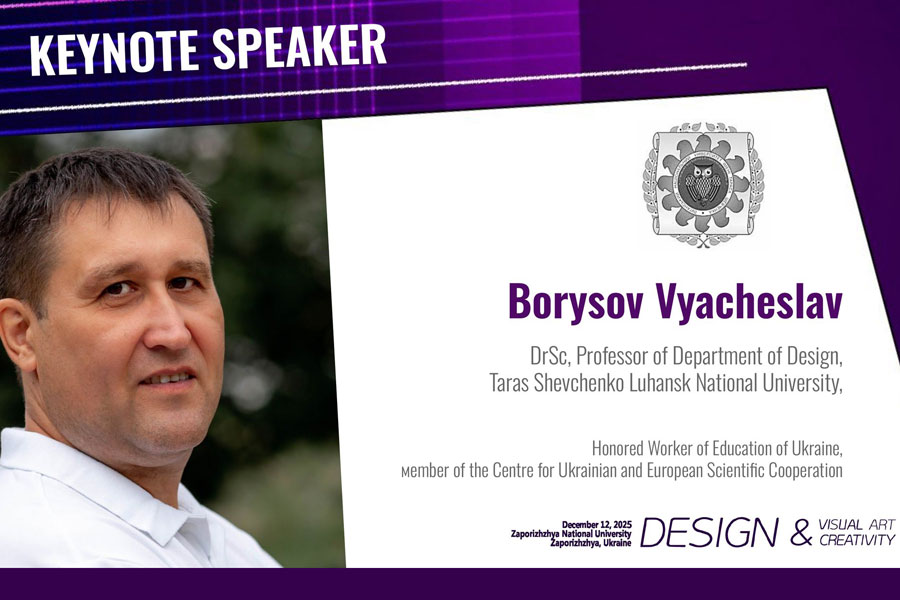
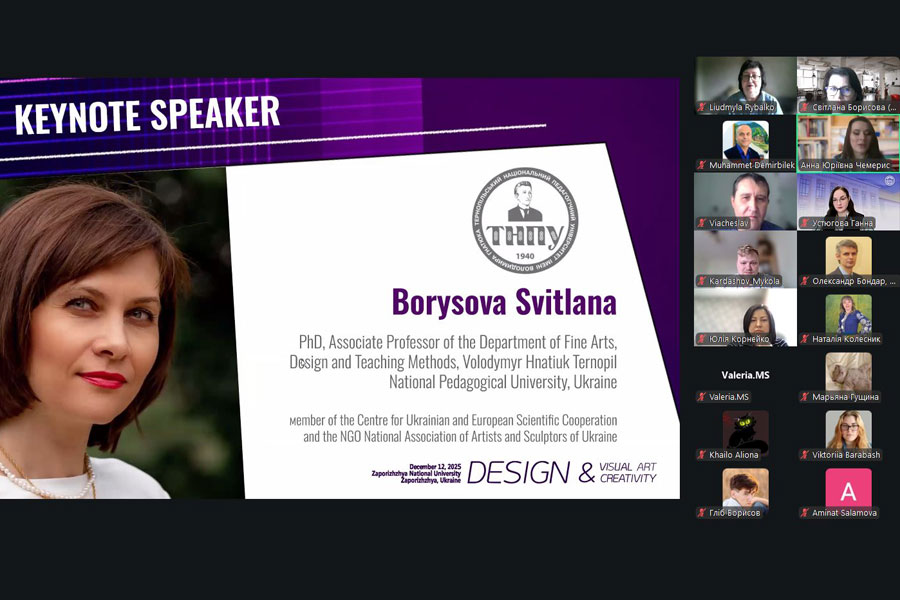
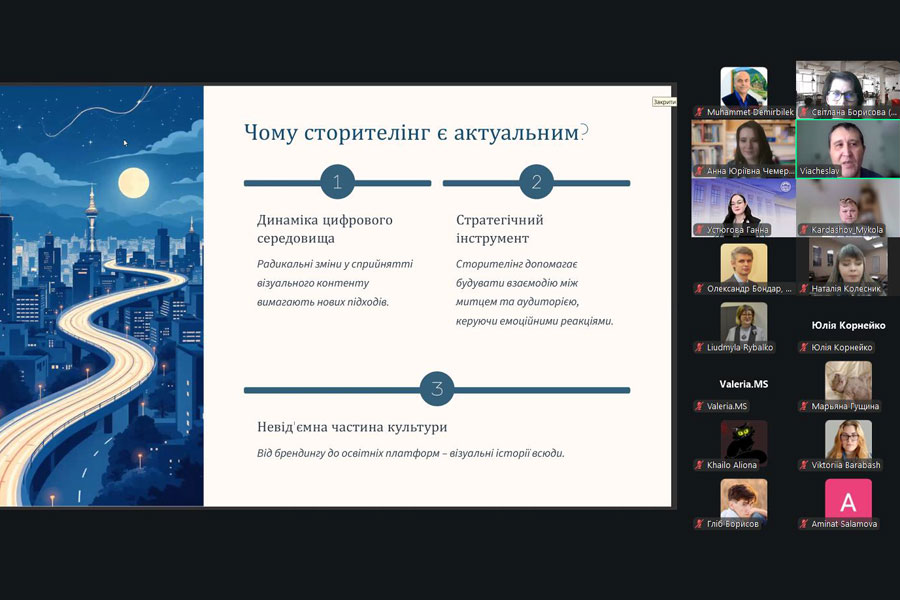
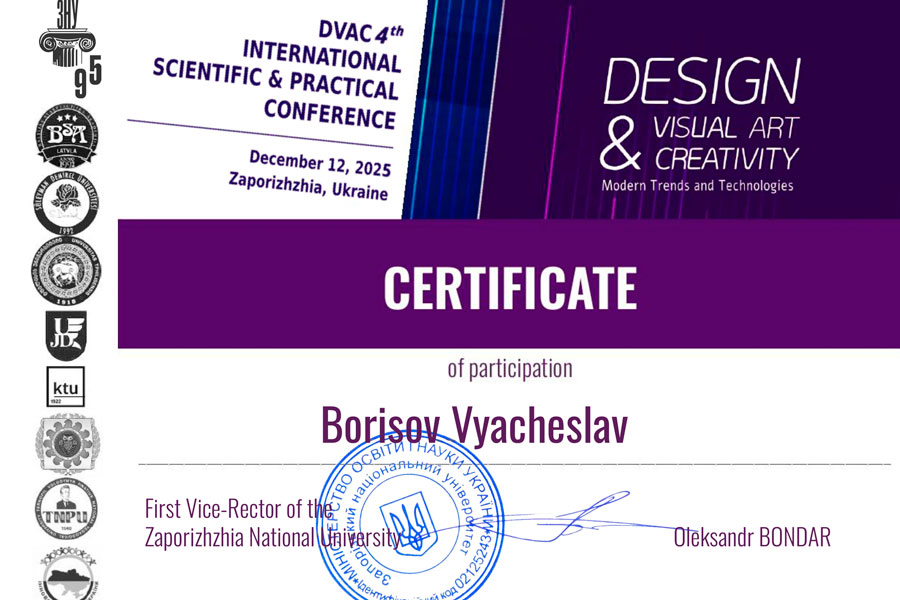
A separate block was devoted to the problem of storytelling in artistic practice. Reports by V. Borisov, Doctor of Pedagogical Sciences, Professor of the Department of Design and Media Production of LTSNU, S. Borisova, Candidate of Pedagogical Sciences, Associate Professor of the Department of Fine Arts and Design of V. Hnatyuk Lviv National University of Public Administration presented modern approaches to the integration of visual narrative into educational and creative processes. The participants emphasized that storytelling today is not only a means of artistic expression, but also an effective technology for the formation of cultural identity, the development of emotional intelligence and the strengthening of the communicative potential of future designers.
In her speech, Doctor of Philosophy (Ph.D.), Associate Professor, Head of the Department of Design of Zaporizhzhia National University, Associate Researcher of the French Research Center for the Humanities and Social Sciences (CEFRES), Visiting Researcher of Indiana University, member of the Union of Designers of Ukraine and the Ukrainian Association of Educational Researchers, Anna Chemerys addressed the issue of successful practices of universal design. She emphasized that the modern accessibility symbol goes beyond the technical designation and becomes an important element of communication between the user and the digital environment. The speaker noted that updated design standards not only increase the convenience of navigation, but also form a culture of respect for different user groups, making software interfaces truly inclusive.
The plenary session demonstrated that design today is not only aesthetics, but a powerful interdisciplinary space where technology, culture, education and innovation meet.
Information Center of the Faculty of Arts
Department of Design and Media Production


